INSULATING A SHED - THE ULTIMATE GUIDE COMPLETE WITH PRODUCT SUGGESTIONS
DIY guide
How to insulate a shed: the complete guide
Turn a cold, damp shed into a dry workshop, a home office or a frost-free store for your tools. This guide covers which insulation to choose, how thick it needs to be, the exact products for budget, mid-range and premium builds, and how to fit the floor, walls and roof step by step.
Cut Price Insulation technical team12 min readOptions for every budget
The short answer
For most sheds, 50mm foil-faced PIR boards fitted between the studs and rafters give the best balance of warmth and cost. Tape every joint, insulate the floor as well, and line the inside with OSB. Polystyrene is the cheapest way to take the chill off. Phenolic gets you the most warmth when the frame is shallow.
Estimates are for an apex shed with about 1.8m eaves, covering walls, roof and floor plus 10% for cutting. They use today's prices. Lining boards and membranes are not included. Measure your shed before ordering.
Why insulate a shed?
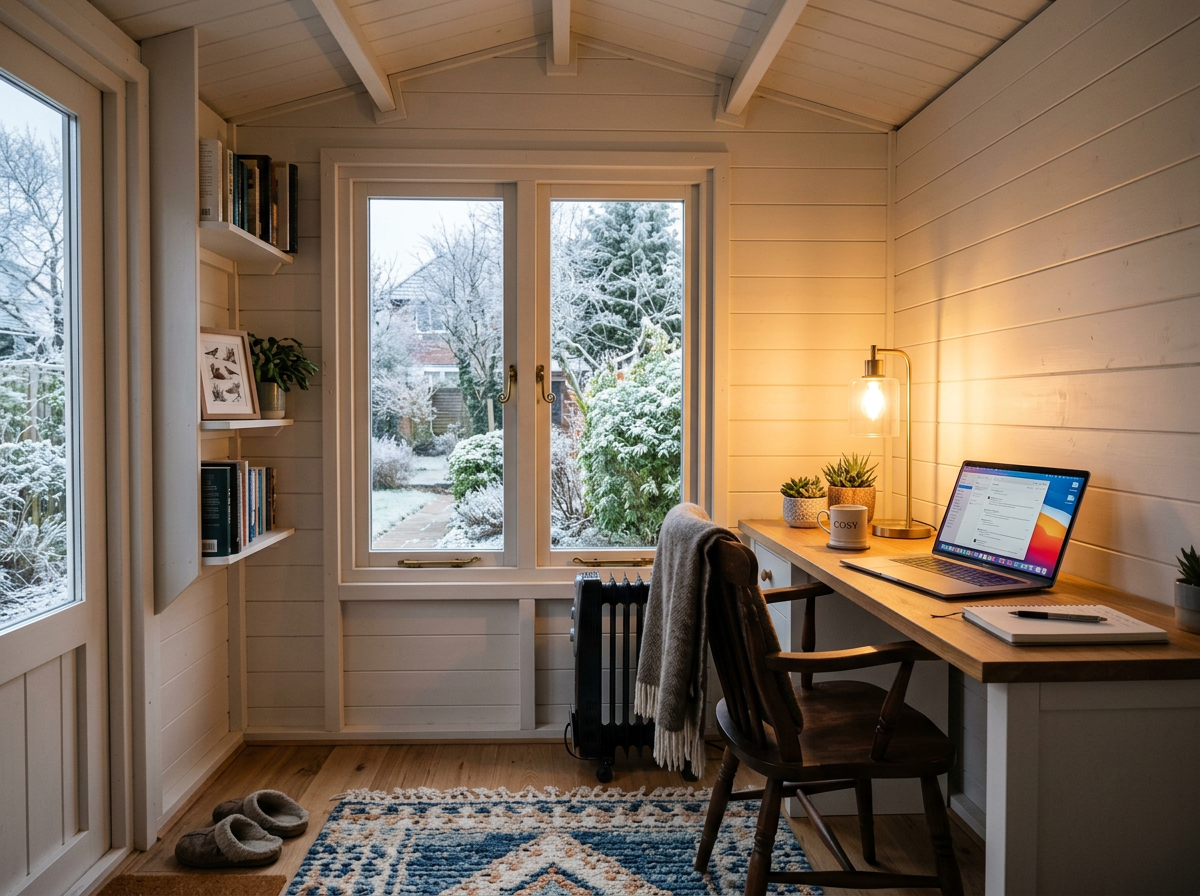
A bare timber shed has very little to stop heat escaping. It's freezing in winter and an oven in summer, and condensation forms on the inside of the cladding every cold night. Insulating it fixes all three problems and makes the space properly usable all year round.
A usable room, all year. A home office, gym, studio or workshop needs insulation before a heater will make any difference.
Less damp and rust. Warmer surfaces mean less condensation, so tools, bikes and garden machinery stay dry.
Cheaper to heat. An insulated shed holds its heat, so a small heater can keep it comfortable without running constantly.
Cooler in summer and quieter. Insulation slows heat gain through a sunny roof and deadens noise from rain and power tools.
Before you start: check your shed
Insulation only works in a dry, sound building. If you trap moisture inside a leaking shed you'll get mould and rot. Spend an hour on these checks first:
Roof is watertight
Replace torn or brittle felt and fix any leaks around the edges. Look for water stains on the underside of the roof boards.
Timber is sound
Replace any soft or rotten studs and treat the outside cladding with a preservative before you close up the walls.
Base is raised and level
The floor should sit on bearers clear of the ground, so air can flow underneath and keep the joists dry.
Measure the frame depth
Measure the depth of your studs and rafters. That number decides which insulation fits flush. Most sheds are 45–50mm, budget sheds can be as little as 28mm.
Planning electrics? Get cables and sockets run before you insulate and line the walls, while the frame is still open. Electrical work in a garden building must be carried out or signed off by a qualified electrician.
Choosing the right shed insulation
Five materials do most of the work in UK sheds. The lower the thermal conductivity (lambda), the better the insulation per millimetre, which matters a lot when your studs are only 50mm deep.
Typical declared values. Always check the datasheet of the individual product.
Rigid boards (EPS, PIR and phenolic) are the easiest to fit in a shed. You cut them to size, push them between the studs, and they stay put without sagging. Mineral wool is cheap and non-combustible, but it needs a deeper frame to perform and must be kept dry with membranes on both sides. Multifoil is thin and quick to staple up, but it only reaches its rated performance with a sealed air gap on each side, so plan for battens.
How thick should shed insulation be?
Fit the thickest board that sits flush with your studs, so the inner lining goes on flat. For a typical 50mm frame, here's how much thermal resistance each material gives you at the same 50mm thickness:
Thermal resistance of 50mm of insulation (higher is warmer)
Glass mineral wool (λ 0.044)R 1.14
Polystyrene EPS70 (λ 0.038)R 1.32
PIR board (λ 0.022)R 2.27
Kooltherm phenolic (λ 0.018)R 2.78
R-value (m²K/W) = thickness in metres ÷ lambda.
50mm of PIR insulates almost twice as well as 50mm of polystyrene. If you want the shed warm enough to work in through the winter, that difference is very noticeable. If your frame is shallower than 45mm, use 25–30mm PIR boards or 30mm multifoil such as SuperFOIL SF6, or add battens to the studs to make room for thicker boards.
Shed insulation by budget
The right products for your budget
Each kit is sized for a typical 8x6ft apex shed, around 24m² of walls, roof and floor, with a little extra for cutting. Got a different size? Use the shed cost estimator to price and order a kit for your shed.
BudgetR 1.32 at 50mm
Take the chill off
Best for storage sheds and occasional use. Keeps frost off tools and cuts condensation for the lowest outlay.
Kit totals use today's prices and update automatically. Quantities are a guide only, so measure your shed before ordering. Lining boards and membranes are listed in the shed essentials below.
Step by step
How to insulate a shed
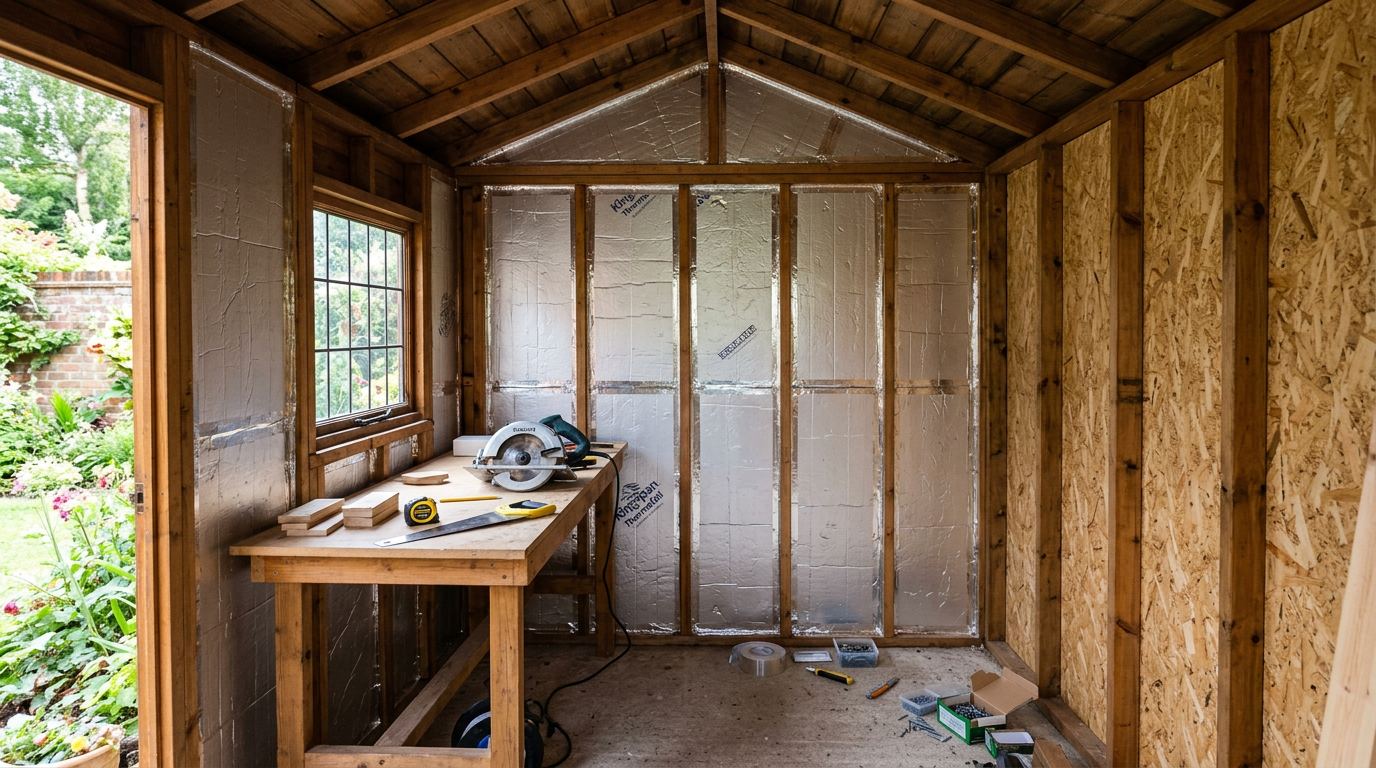
Work from the bottom up: floor first, then walls, then roof. That way each layer laps neatly over the one below. A typical 8x6ft shed takes a competent DIYer one to two weekends.
Saw or long-blade knifeTape measure and straight edgeStaple gun and screwsGloves, mask and goggles
1Prepare and seal the shed
Clear the shed out completely. Fix any roof leaks, then fill gaps around the window frames and between cladding boards with exterior sealant. If your shed has no membrane behind the cladding, staple a breathable membrane across the inside of the studs. It keeps out wind-driven rain that gets through the shiplap but lets moisture escape.
2Insulate the floor
The floor is often the coldest part of a shed. If you can lift the existing boards, fit insulation between the joists, resting on battens. If not, lay over the top: a damp-proof membrane first, then insulation boards butted tightly together, then an 18mm tongue-and-groove OSB deck floated on top. EPS is a great value choice here because the floor deck spreads the load.
aMeasure each bay separately. Shed studs are rarely evenly spaced. Measure between the studs at the top and bottom of every bay.
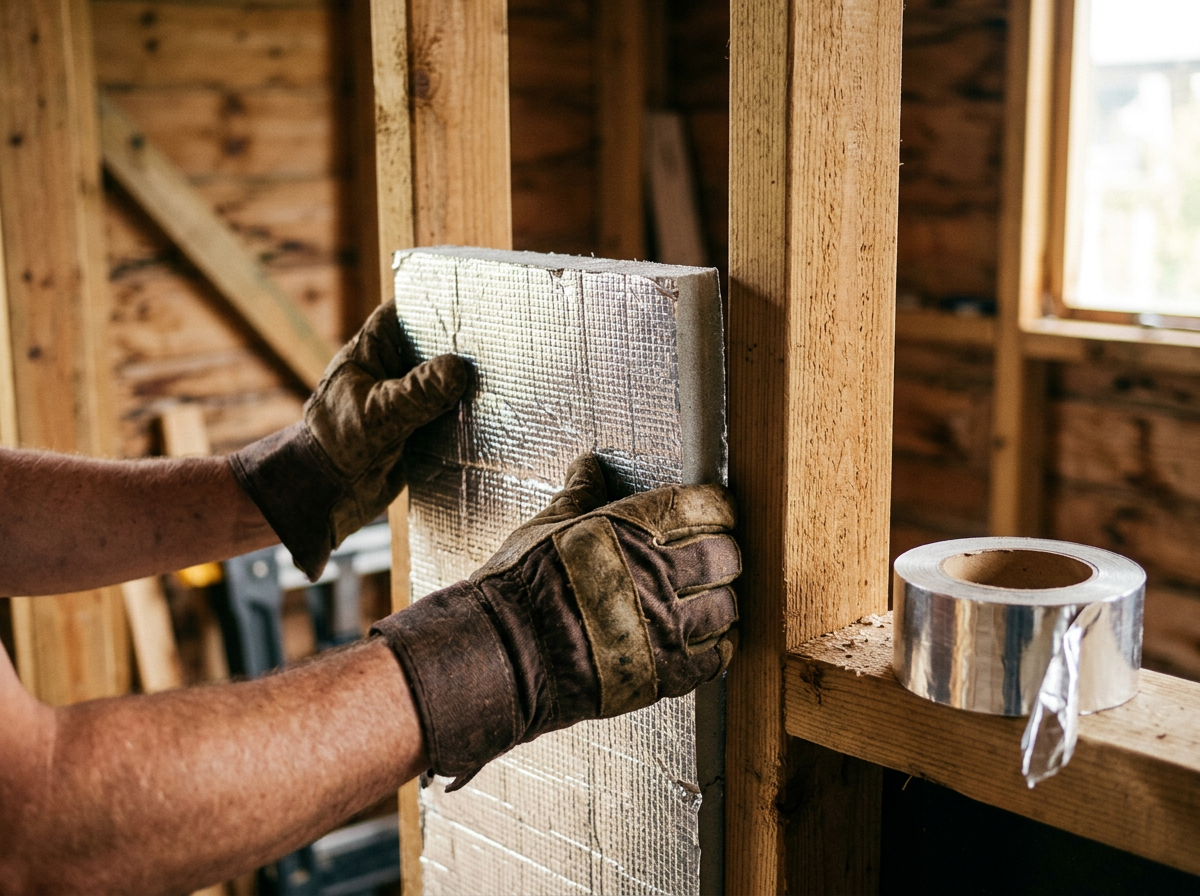
bCut boards 2–3mm oversize for a snug friction fit. Score PIR with a long-blade knife and snap it, or cut it with a fine-tooth saw.
cPush boards in flush with the inner face of the studs. If your frame has no membrane, leave a small air gap behind the board so the cladding can dry out.
dFill any gaps with low-expansion foam, then tape every joint between the boards and studs with foil tape. This seals out draughts and turns foil-faced boards into a continuous vapour control layer.
Pro tip: stapling a layer of SuperFOIL SF19+ across the face of the studs, over PIR boards, cuts the heat lost through the timber frame itself. Batten it out by 25mm before lining to create the air gap multifoil needs.
4Insulate the roof
Heat rises, so the roof deserves your best insulation. Fit boards between the rafters exactly as you did the walls. Where you can, leave a 25mm ventilated gap between the board and the roof deck so condensation under the felt can escape. Hold the boards in place with timber battens or screws and large washers while you tape the joints. If your rafters are very shallow, a multifoil such as SuperFOIL SF6 stapled under the rafters is quick and keeps your headroom.
5Line and finish the inside
If you used polystyrene or mineral wool, first staple a vapour control layer over the studs on the warm (inside) face, lapping and taping the joints. Then screw 11mm OSB to the studs and rafters. It's tough enough to hang shelves and tools from, and you can paint it for a clean finish. For a garden office, vapour-check plasterboard gives a smoother, more room-like finish.
Finish by fitting draught strip around the door and gluing a thin offcut of PIR to the back of the door panel. Doors are often the biggest gap left in an otherwise well-insulated shed.
Stopping condensation
Condensation forms when warm, moist air hits a cold surface. In a shed that surface is the back of the cladding or the underside of the roof. The fix is a simple rule: seal the warm side, let the cold side breathe.
Warm side: taped foil-faced boards, or a polythene vapour control layer, stop moist indoor air reaching the cold timber.
Cold side: a breathable membrane and a small air gap let any moisture in the cladding dry out.
Ventilate: keep a small trickle vent or an opening window, and avoid paraffin or gas heaters, which release a lot of water vapour.
Common mistakes to avoid
Insulating a leaking shed. Trapped water rots the frame from the inside. Fix the roof first.
Skipping the floor. A cold floor undoes much of the good work you've done on the walls and roof.
Leaving gaps and untaped joints. Small gaps let cold air bypass the insulation completely. Foam and tape everything.
Squashing mineral wool. Compressed wool loses much of its performance. If it doesn't fit, use a rigid board.
Fitting multifoil with no air gap. Without sealed air gaps either side, multifoil performs far below its rating.
Finish the job properly
Shed insulation essentials
The membranes, tape and boards that turn insulation into a dry, draught-free shed.
For most sheds, foil-faced PIR boards such as Celotex GA4000 are the best all-rounder. They're rigid, easy to cut, insulate almost twice as well as polystyrene at the same thickness, and the foil facing acts as a vapour barrier once the joints are taped.
How thick should shed insulation be?
Match the depth of your studs, usually 45–50mm, so the lining fits flat. 50mm PIR suits most sheds. For shallower frames, use 25–30mm boards or multifoil, or add battens to make room for more.
Do I need a vapour barrier in a shed?
Yes, on the warm (inside) face. With foil-faced PIR or phenolic, taping the joints with foil tape does the job. With polystyrene or mineral wool, fit a separate vapour control layer before lining.
Can I use polystyrene to insulate a shed?
Yes. EPS polystyrene sheets are the cheapest rigid option and work well for storage sheds and floors. You'll need roughly twice the thickness of PIR for the same warmth, so it's less suited to sheds you want to use as a room in winter.
Is multifoil enough on its own?
For a lightly used shed, yes, if you fit it with sealed air gaps either side. For a heated office or workshop, multifoil works best with PIR boards between the studs. Browse the SuperFOIL range to compare options.
Do I need planning permission or Building Regulations?
Insulating an existing shed doesn't need planning permission. Garden buildings under 15m² with no sleeping accommodation are generally exempt from Building Regulations, but any electrical work must still comply. If you're unsure, check with your local authority.
How quickly can I get my insulation delivered?
Most boards and accessories are available for next-day delivery. Need help working out quantities? Call our team on 01480 878787.
Ready to insulate your shed?
Choose PIR boards for the best all-round result, or keep costs down with polystyrene. Either way you get trade prices, and most orders are delivered next day.
 Top pick · walls, roof, floorExpanded Polystyrene (EPS 70) 1200 x 2400 x 50mm (Pack of 12)£137.95
 Alternative · deeper framesSuperglass Loft Insulation 100mm£30.95
 Alternative · thin framesSuperFOIL SF6 30mm (1.2m x 10m)£82.95